silver · investing · market
Silver Crashed 50%. Stackers Are Buying More Than Ever.
Silver fell from $121 to under $60 this year. Physical demand for bars and coins is set to hit its highest level since 2022 anyway.
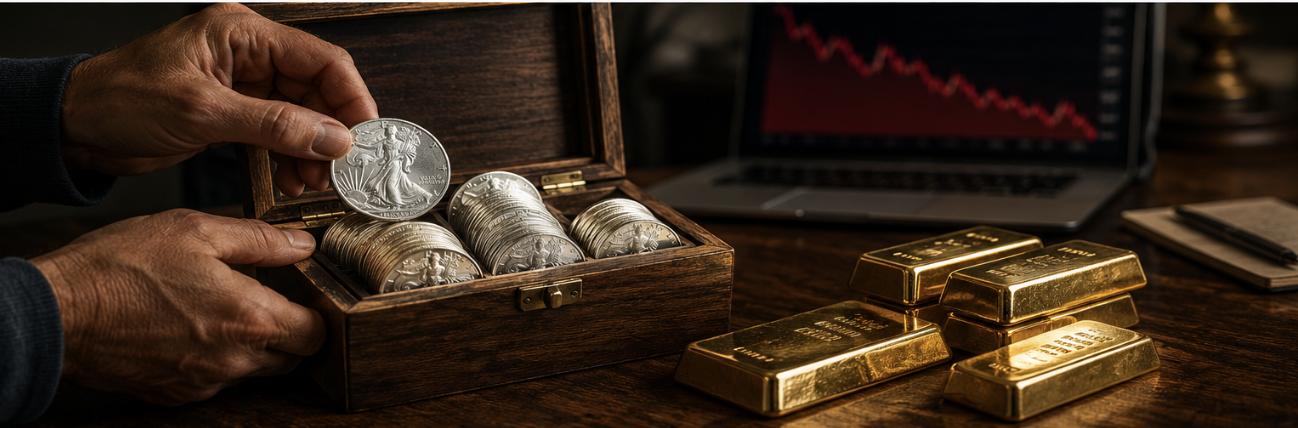
Silver hit $121.64 an ounce in January. It’s trading near $58 today. That’s a 52% drawdown in seven months — the kind of chart that makes CNBC anchors say the word “crash” in a tone usually reserved for regional banks.
And yet physical demand for silver bars and coins is projected to rise 18% this year, to the highest level since 2022. Read that twice. The people buying the actual metal are buying more of it, not less, while the price gets cut in half.
The Two Silver Markets Nobody Talks About
Here’s the thing Wall Street keeps missing: there isn’t one silver market, there are two. There’s paper silver — futures, ETFs, leveraged bets that move on Fed speeches and hedge fund flows. And there’s physical silver — actual coins and bars sitting in actual safes, bought by actual people who aren’t marking to market every morning.
Paper silver just got demolished. It ran from a $36 low last July to $121.64 in an epic squeeze, then gave half of it back once the momentum crowd found the exits. That’s what a casino looks like. It’s not what a savings account looks like.
Physical demand doesn’t work that way, and this year proves it. Retail buyers are treating $58 silver the way they treat a grocery sale — as an opportunity, not a warning sign. You cannot manufacture a supply shortage in something nobody wants.
The Deficit That Doesn’t Care About Your Chart
While retail traders were riding silver up to $121.64 and then panic-selling it back to $58, the Silver Institute quietly reiterated its forecast: a 46.3 million ounce supply deficit for 2026, wider than 2025’s 40.3 million. That’s the sixth consecutive year mining and recycling haven’t kept up with what solar panels, electronics, and stackers actually consume.
A price crash doesn’t fix a supply deficit. Nobody at a silver mine wakes up after a bad Tuesday in the futures market and finds 46 million more ounces in the ground. The industrial buyers still need the metal. The deficit is structural — it was there at $30 silver, it was there at $121 silver, and it’s still there at $58 silver.
That’s the disconnect. Price is a mood ring for traders. The deficit is a fact for everyone else.
What This Means for Stackers
I’ve said this before and I’ll keep saying it: if you’re buying silver on a schedule to own metal, not to time a trade, this year is a gift, not a warning. You watched the price triple and then get cut in half — and your actual buying power, ounce for ounce, is better today than it’s been since spring.
Ignore the “silver crashed” headlines. That’s a paper-market story about leverage unwinding, not a physical-market story about the metal itself. The deficit didn’t shrink — it widened. The people who actually want silver in hand are still buying, and physical investment demand is set to climb 18% this year.
Keep your schedule. Keep your dollar-cost average. The Fed meets next week and everyone will have an opinion about what that does to the spot price. None of it changes how many ounces are actually coming out of the ground versus how many the world needs. That math was true in January at $121, and it’s true today at $58.
Sources
- Global Silver Investment to Remain Strong in 2026 Against the Backdrop of a Sixth Consecutive Annual Market Deficit — The Silver Institute
- Silver Institute: Sustained Supply Deficit Exposes Market to Squeezes — Investing News Network